
FMCG Consumer Trends in India: 7 Shifts Brands Must Track
Seven FMCG consumer shifts in India, from health and premiumisation to rural growth, regional brands, quick commerce, and the smart shopper.

RPC EDITORIAL TEAM
Real Plan Consulting
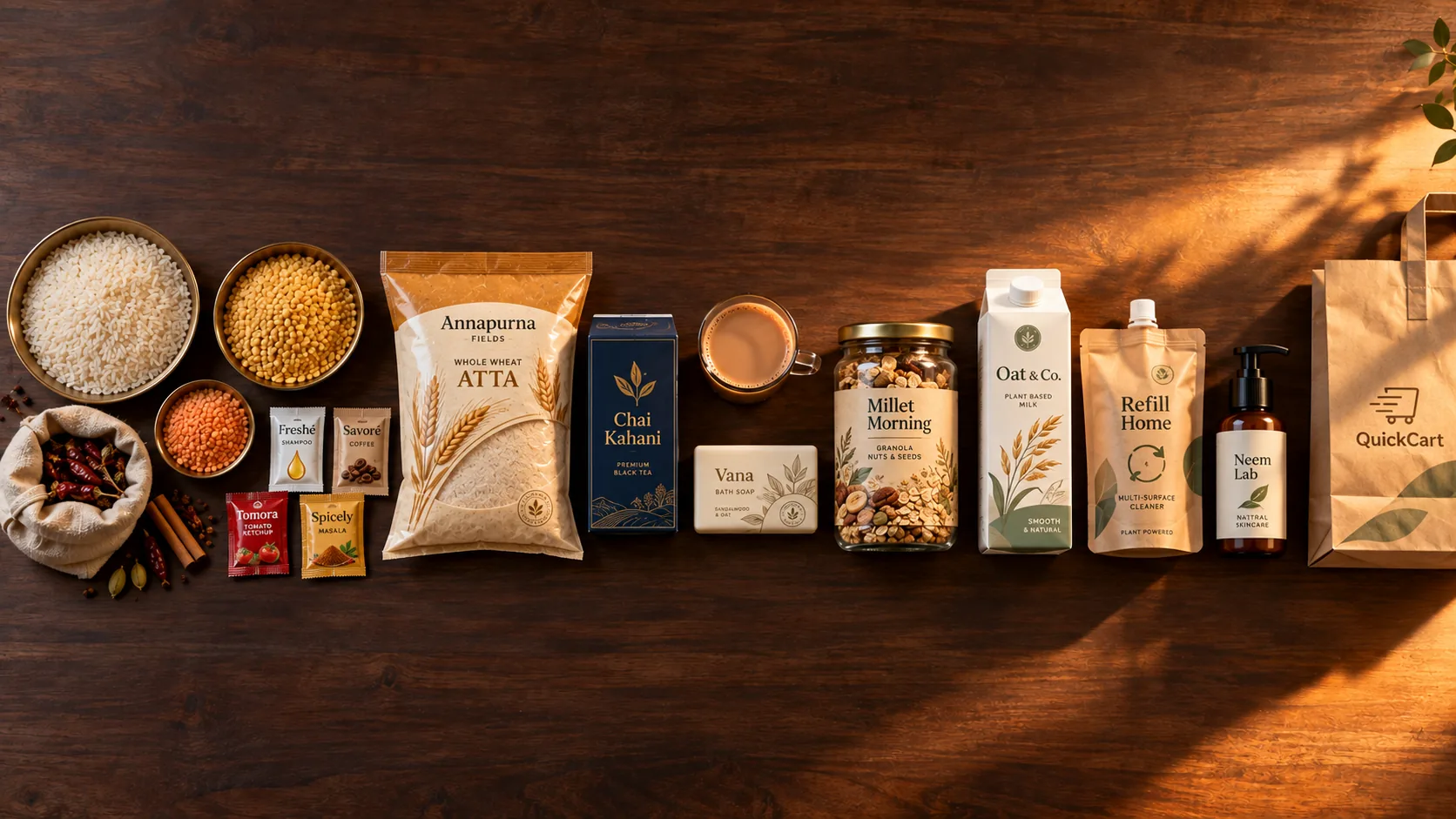
India’s fast-moving consumer goods (FMCG) sector is one of the largest and most complex in the world, reaching nearly every Indian household through food and beverages, personal care, household products, and packaged staples. For brands, tracking FMCG consumer trends in India is not a quarterly exercise but a continuous operational requirement.
There is no single Indian FMCG consumer. The market includes a rural buyer in Uttar Pradesh purchasing single-serve sachets, a health-conscious millennial in Pune switching to clean-label products, a working mother in Chennai choosing a trusted regional brand, and a first-time smartphone user in Odisha discovering direct-to-consumer (D2C) brands through social commerce. Each segment is evolving in a different direction at a different pace.
This article examines seven consumer trends reshaping India’s FMCG market and what they mean for brands and their consumer research.
1. Health, Wellness, and Ingredient Consciousness
Health awareness among Indian consumers is no longer limited to premium urban segments. Across income brackets and geographies, more consumers now read ingredient lists, question sugar and sodium content, and seek out natural or “free-from” variants. The key drivers are:
- Rising incidence of lifestyle diseases such as diabetes, hypertension, and obesity
- Health content on YouTube and Instagram that makes ingredient information widely accessible
- A heightened post-pandemic focus on immunity, hygiene, and personal health
- Wider availability of health-positioned alternatives
Health positioning is now a table-stakes expectation in categories from biscuits to cooking oils, dairy, and personal care. Brands that ignore how their formulations, ingredient communication, and packaging shape health perceptions risk losing ground to health-focused and D2C clean-label competitors.
Health perception, however, often does not match nutritional reality. A product healthier than its category average may still be seen as unhealthy because of packaging cues or its association with an older formulation. Research that maps the gap between actual and perceived health credentials is increasingly valuable.
2. Premiumisation in an Aspiration-Driven Market
India’s middle class is growing not just in size but in aspiration. Consumers who once bought the cheapest option are increasingly willing to trade up for a better experience, a stronger brand story, or higher perceived quality. Premiumisation is most visible in:
- Personal care: Salon-quality and dermatologist-recommended products for home use
- Packaged foods: Artisan, gourmet, and regional speciality foods
- Health supplements and functional foods: Protein powders, nutraceuticals, and fortified foods, treated as preventive health spending
- Home care: Fragrance, fabric care, and surface cleaning products, driven by more time at home and higher hygiene standards
Premiumisation in India is driven as much by aspiration, occasion, and digital exposure as by income growth. A household may buy economy-tier cooking oil for daily use and a premium cold-pressed variant for special occasions. This layered behaviour calls for segmentation beyond household income.
3. Rural India as the FMCG Growth Engine
Rural markets represent the largest volume opportunity in FMCG. Rural FMCG consumption has grown faster than urban consumption in several categories, supported by rising agricultural incomes, better infrastructure, wider distribution, and greater digital media exposure. Key shifts in rural consumer behaviour include:
- A growing preference for branded over loose or unbranded products
- Rising demand for products once considered urban or premium
- Younger rural consumers who are more brand-aware and willing to experiment
- Wider product access through kirana networks, van sales, and mobile commerce
Rural India is not one market with one playbook, but many distinct markets with their own income levels, infrastructure, and habits. Brands that segment it by district, crop economy, road and retail access, and media reach will make far better decisions than those relying on state-level averages.
4. The Rise of Regional Brands and Local Trust
Regional brands are becoming a serious competitive force. In snacks, beverages, dairy, personal care, and household products, many are outperforming national competitors in their home markets through deeper local understanding, faster product iteration, and trust built on cultural familiarity. Where taste, fragrance, or cultural association drives preference, local knowledge is a genuine product advantage, not just a marketing one.
For national brands, research that maps regional taste preferences helps them adapt rather than assume. For regional brands planning to expand, research should identify which home-market advantages will travel and which need adapting before committing distribution and marketing investment.
5. Digital and Quick Commerce: The New Purchase Journey
E-commerce, and especially quick commerce with deliveries in ten to thirty minutes, has changed not only where urban consumers buy, but also how they discover, evaluate, and switch between brands:
- Discoverability: Platforms surface niche brands alongside established ones, weakening the advantage of shelf dominance.
- Price comparison: Instant comparison raises price sensitivity and makes promotions more visible.
- Reviews: Ratings act as a key trust signal for unfamiliar brands.
- Repeat purchase: Subscription and auto-replenishment features are reshaping category loyalty in ways traditional retail metrics do not capture.
Platform data shows what is happening online, but not why. Research that maps the decision journey across digital and physical touchpoints helps brands optimise channel investment and product presentation.
6. Sustainability and Conscious Consumption
As a consumer concern, sustainability is at an earlier stage in India than in Western markets, but it is growing among urban, educated, and younger consumers. These consumers are increasingly aware of packaging waste, plastic use, and ingredient sourcing. It matters most in personal care, home care, and premium packaged foods, and carries less weight where affordability is the main purchase driver.
Sustainability positioning needs substantive product and packaging credentials, not just messaging. Consumers are increasingly able to spot greenwashing, and the reputational risk of unsupported claims outweighs any short-term gain. Research should test how credible a claim appears to consumers, not just to the brand.
7. Value-Seeking Behaviour and the Smart Shopper
Premiumisation and value-seeking are growing at the same time, and that is not a contradiction. The same consumer may trade up in one category while hunting for deals in another. The “smart shopper” compares prices, times purchases around promotions, and switches brands to stretch a budget. This shopper is now common across urban and semi-urban India, driven equally by digital tools that make comparison effortless and by economic pressure that makes it necessary. For brands, this means:
- Pack sizes must serve both the lowest-price buyer and the buyer willing to pay more for a larger or better variant.
- Promotions should build loyalty, not just attract deal-hunters who will switch again.
- Pack-price testing is especially useful where some buyers are trading up while others are cutting back.
What These Trends Mean for FMCG Consumer Research
The pace of these shifts makes ongoing, structured consumer research a commercial necessity. Key priorities include:
- Segmentation studies to identify which consumers are moving towards health, premiumisation, or value-seeking
- Regional consumer studies to calibrate national strategies for regional realities
- Pack and price architecture testing to guide decisions on volume and margin
- Brand health tracking to detect erosion before it shows in sales data
Conclusion
India’s FMCG sector is not standing still, and neither are its consumers. The brands that lead in the next decade will act on today’s trends before they become obvious: spotting the regional brand gaining ground before it takes share, the health shift before it shows in switching behaviour, and the rural opportunity before capturing it becomes too expensive. Consumer research makes this foresight possible by revealing what consumers are thinking, wanting, and deciding right now.
Need a sharper view of where your FMCG consumers are heading?
Real Plan Consulting helps FMCG brands understand buyer behaviour through segmentation surveys, brand equity analysis, and product demand and pricing analysis, backed by pan-India fieldwork.
Explore our Market Research services or tell us your requirement.
Frequently Asked Questions
What are the key FMCG consumer trends in India?
The key trends are health and ingredient consciousness, premiumisation, rural growth, the rise of regional brands, digital and quick commerce, sustainability, and value-seeking behaviour.
How does consumer research help FMCG brands?
It explains why buyers behave as they do, so brands can act on shifts before they show up in sales data.
More related blogs

How to Build a Strong Go-to-Market Strategy Using Market Research
How market research shapes each part of a go-to-market strategy: segment, value proposition, price, channel, message, and trade support.
Decoding Shifts in Consumer Preferences in India's FMCG Market
Consumer behaviour in India is reshaping FMCG. Explore market research trends, consumer research insights, and strategies brands use to stay competitive.

The Essential Role of Market Research in Start-Up Success
Learn how to conduct market research for start-ups — from idea validation to market opportunity assessment — and why research is the foundation of sustainable growth.
.aa1fbc66.webp)
.472e3010.webp)
.b585c3ce.webp)
.550b5f97.webp)
.c0585a9c.webp)
.01f95931.webp)
.b31b7b26.webp)
.93a72342.webp)
.d4896d80.webp)
.95ca9319.webp)
.c4c4b939.webp)

.4eaa46ce.webp)